
PRACTICAL SUPPORT FOR MUMS OF YOUNG CHILDREN WITH BIG REACTIONS
Your child isn’t broken
And you’re not failing
Understand your child
Know how to help
Trust yourself as their mum
When ordinary requests become battles and the usual parenting advice only makes things harder, it’s easy to feel confused, isolated and afraid you’re getting it wrong.
Your Unique Child helps you understand what your child is struggling to manage, recognise the pressure earlier and respond with fewer words, less pressure and one manageable next step—so you can support your child while protecting the connection between you.
You don’t need another parenting tip. You need to understand why everything feels so hard.
Your Unique Child doesn’t give you another generic technique or tell you to try harder. It helps you reframe your child’s behaviour by looking underneath what you can see and understanding what they are struggling to manage.
Understanding what your child’s behaviour is communicating gives you a clearer place to start: “What is hard for my child right now—and what would help make the next step more manageable?”
Your Unique Child helps you:
Reframe the behaviour as information about overwhelm, changing capacity, an inaccessible skill or a need your child cannot communicate.
Move away from blame and shame by recognising that your child is struggling - not choosing to make life hard - and that you’re learning, not failing.
Know how to help in the hard moment by using fewer words, reducing the pressure and helping your child manage one next step.
Protect the connection between you by supporting your child through the difficult moment, then guiding and teaching when they can listen and learn.
Help other adults understand your child by putting the patterns, early signs and support needs you notice into words.
Trust what you know about your child and feel more confident in how you respond - with or without a diagnosis.
A SIMPLE PLACE TO BEGIN
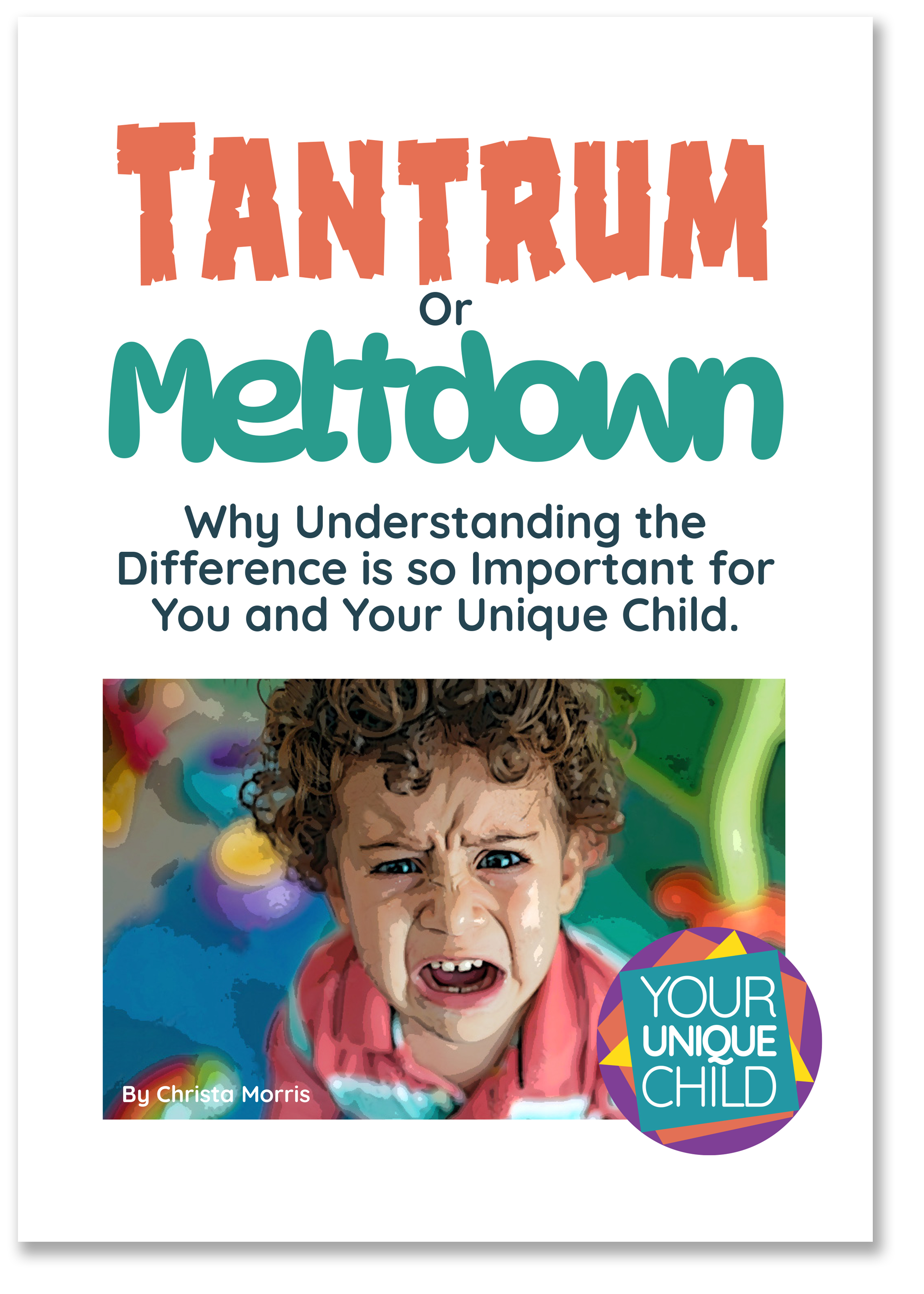
When firmer instructions, more explaining or consequences make the reaction bigger
It may not be a tantrum.
A meltdown can look like a tantrum from the outside, but your child may not have the same ability to listen, reason or regain control when overwhelm has taken over.
Responding with more pressure can increase their distress—not because you’re doing something wrong, but because a tantrum and a meltdown need different responses.
The free Tantrum or Meltdown? guide will help you:
understand the important differences between tantrums and meltdowns
recognise signs that your child is becoming overwhelmed
understand why consequences or firmer instructions can escalate a meltdown
respond in a way that fits what your child can manage in that moment
You’ll also receive practical printable resources to help you apply what you learn to your own child.
Free download · No diagnosis needed
WHEN MELTDOWNS KEEP CATCHING YOU OFF GUARD
Spot the pressure and earlier signs before a small request becomes a meltdown
When a reaction seems to come from nowhere, you’re left trying to work out what you missed and what you should do differently next time.
The final request is often only the last pressure in a much bigger build-up.
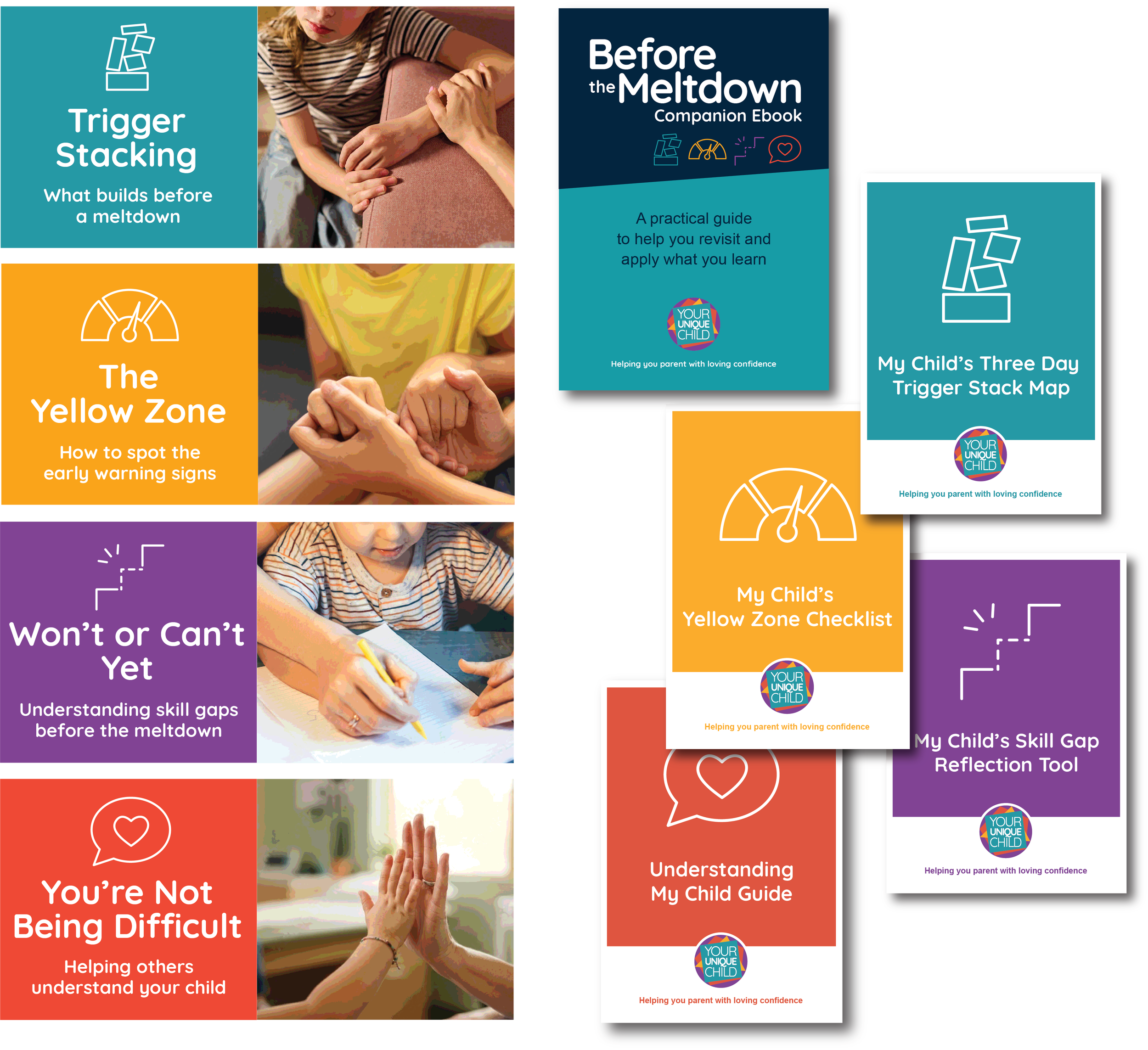
Before the Meltdown gives you a practical process for connecting what has happened across your child’s day with the reaction you see at the end of it.
Across four short, watch-anytime workshops, you’ll learn how to:
recognise the pressures building before the hard moment
notice your child’s earlier signs of struggle
understand when “won’t” may really mean “can’t yet”
respond with fewer words, less pressure and one manageable next step
help partners, grandparents, teachers and other caregivers understand and support your child too
Hard moments will still happen. The difference is that you’ll understand more of what your child is struggling to manage and have a practical response to return to.
NZ$47 one-time · Four short workshops · Four practical downloadable tools · Companion ebook · No diagnosis needed
The CARE Formula
The CARE Formula guides everything I create at Your Unique Child.
It shifts the focus away from fixing behaviour and towards understanding your child, reducing blame and protecting the connection between you.
Communicate
Recognise behaviour as information and find ways to connect with your child when the moment is hard.Advocate
Put your child’s patterns, early signs and support needs into words so other adults can understand and help.Reframe
Move away from seeing your child as naughty or difficult and look at what they are struggling to manage.Empower
Use what you understand to choose support that fits your child, your family and the moment in front of you.